
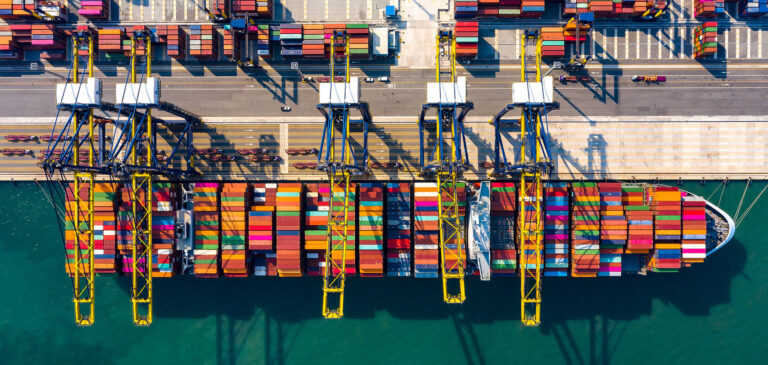
Cyber-attacks on one of the world’s busiest ports have nearly doubled since the start of the Covid pandemic.
The number of monthly attacks targeting the Port of Los Angeles is now around 40 million, the port’s executive director Gene Seroka told the BBC.
Los Angeles is the busiest port in the western hemisphere, handling more than $250bn (£210bn) of cargo every year.
The threats are believed to come mainly from Europe and Russia, and aim to disrupt the US economy, Mr Seroka said.
“Our intelligence shows the threats are coming from Russia and parts of Europe. We have to stay steps ahead of those who want to hurt international commerce,” he told the BBC’s World Service.
Seaports move billions of dollars in goods every year, making them a unique target for cyber-criminals.
They face daily ransomware, malware, spear phishing and credential harvesting attacks, with the aim of causing as much disruption as possible and slowing down economies.
Supply chain blockages
During the pandemic global supply chains slowed down as lockdowns closed factories and workers were forced to stay at home.
The strain on supply chains has since eased, Mr Seroka said. In January 2022 there were 109 container ships queuing for more than two days to get into the Port of Los Angeles. Today there are around 20 waiting to dock.
But Mr Seroka believes the blockages won’t clear completely until 2023. “There’s so much cargo coming in and not enough space,” he said.
“The past two years have proven the vital role that ports hold to our nation’s critical infrastructure, supply chains and economy. It’s paramount we keep the systems as secure as possible,” he added.
Read full news from BBC, here: https://www.bbc.com/news/business-62260272
Want more? Visit our website: https://logixcare.com/
Phone: (305) 517 1000
Support: (305) 517 1001
Email: [email protected]
LogixCare LLC. 2023 © All Rights Reserved
We use cookies to improve your experience on our site. By using our site, you consent to cookies.
Manage your cookie preferences below:
Essential cookies enable basic functions and are necessary for the proper function of the website.
Google reCAPTCHA helps protect websites from spam and abuse by verifying user interactions through challenges.
Statistics cookies collect information anonymously. This information helps us understand how visitors use our website.
Google Analytics is a powerful tool that tracks and analyzes website traffic for informed marketing decisions.
Service URL: policies.google.com (opens in a new window)
You can find more information in our Cookie Policy and Privacy Policy.